
Indian Ambassador Vishwesh Negi Highlights Shared Values and Historical Ties with Iran on Constitution Day
The Ambassador of India to Iran, Vishwesh Negi, reaffirmed the strong friendship between the two countries and highlighted their shared commitment to dialogue, mutual respect and the peaceful resolution of differences during a speech marking India's Constitution Day in Tehran on Thursday, November 26.
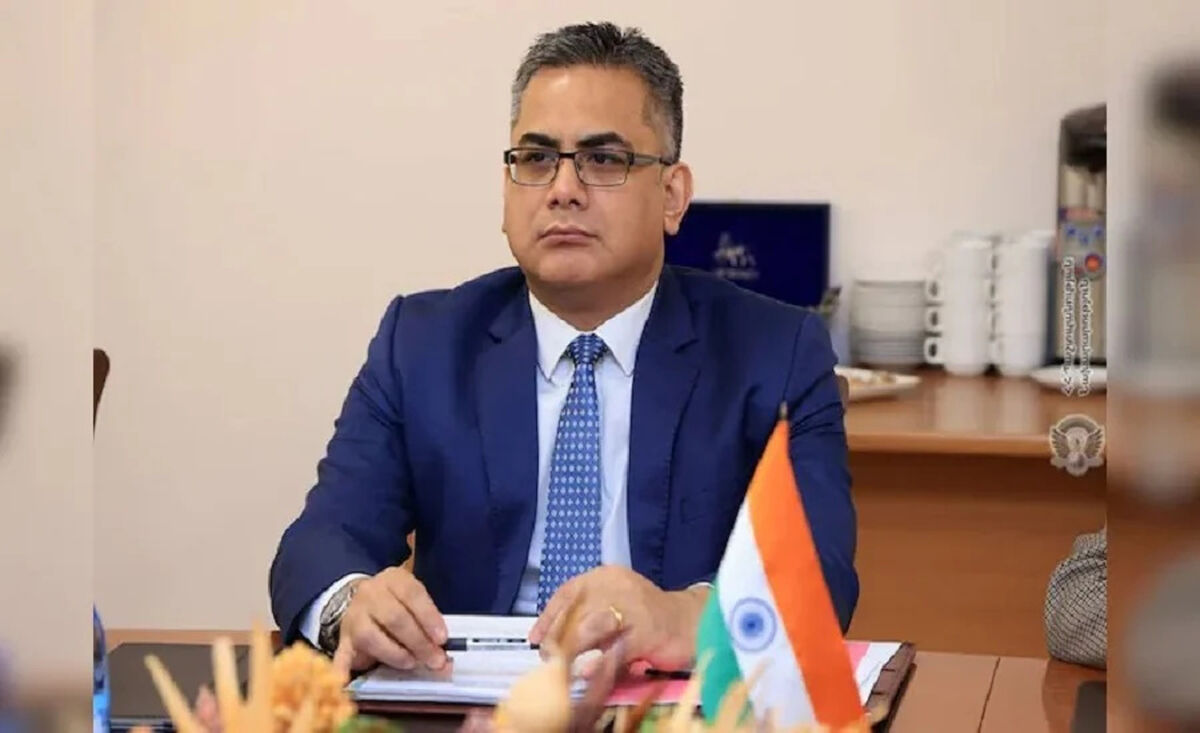
Addressing Iranian guests and participants at the event, Negi said India's Constitution, adopted on November 26, 1949, and brought into force on January 26, 1950, transformed the country into a sovereign democratic republic.
Describing the Constitution as more than a legal document, the ambassador said it reflected India's decision to organise itself as a free, pluralistic and united nation following a long struggle for independence.
He noted that India's Constitution is the world's longest written national constitution, adding that although its framers drew inspiration from several international models, they adapted these principles to India's unique conditions and historical context.
Negi also highlighted the Constitution's distinctive artistic features, noting that the original document was handwritten and illustrated by artists from Shantiniketan with scenes from India's history, from the Indus Valley civilisation to the country's freedom movement.
Explaining its key principles, he said the Constitution guarantees fundamental rights, including equality before the law and freedom of speech, religion and expression. It also provides for social and economic justice and grants every adult citizen the right to vote, regardless of caste, gender, religion, wealth or education.
He stressed that India's constitutional framework seeks to preserve the country's extensive linguistic, religious and cultural diversity while maintaining national unity through federalism, minority protections and local self-government.
Describing the Constitution as a "living document," Negi said it has evolved through more than a hundred amendments while preserving its fundamental structure and values.
Drawing parallels between the two countries, the Indian ambassador said India and Iran share longstanding civilisational values, including justice, human dignity and respect for the rule of law. He added that both countries have faced the challenge of governing vast and diverse societies.
Negi expressed hope that as India and Iran continue to strengthen their bilateral partnership, their commitment to dialogue, mutual respect and peaceful resolution of differences will remain a solid foundation for cooperation.
Concluding his remarks, he reaffirmed India's warm friendship with the Iranian people and expressed hope that the two ancient civilisations would continue to move forward together through mutual understanding and shared prosperity.