
download
Iran-US Confrontation Could Enter Most Dangerous Phase Before January 2027
Iranian international affairs expert Rahman Ghahremanpour has warned that the period leading up to the inauguration of the new US Congress in January 2027 could become one of the most dangerous phases in tensions between Tehran and Washington, as President Donald Trump may intensify his confrontational policies toward Iran to secure his presidential legacy.
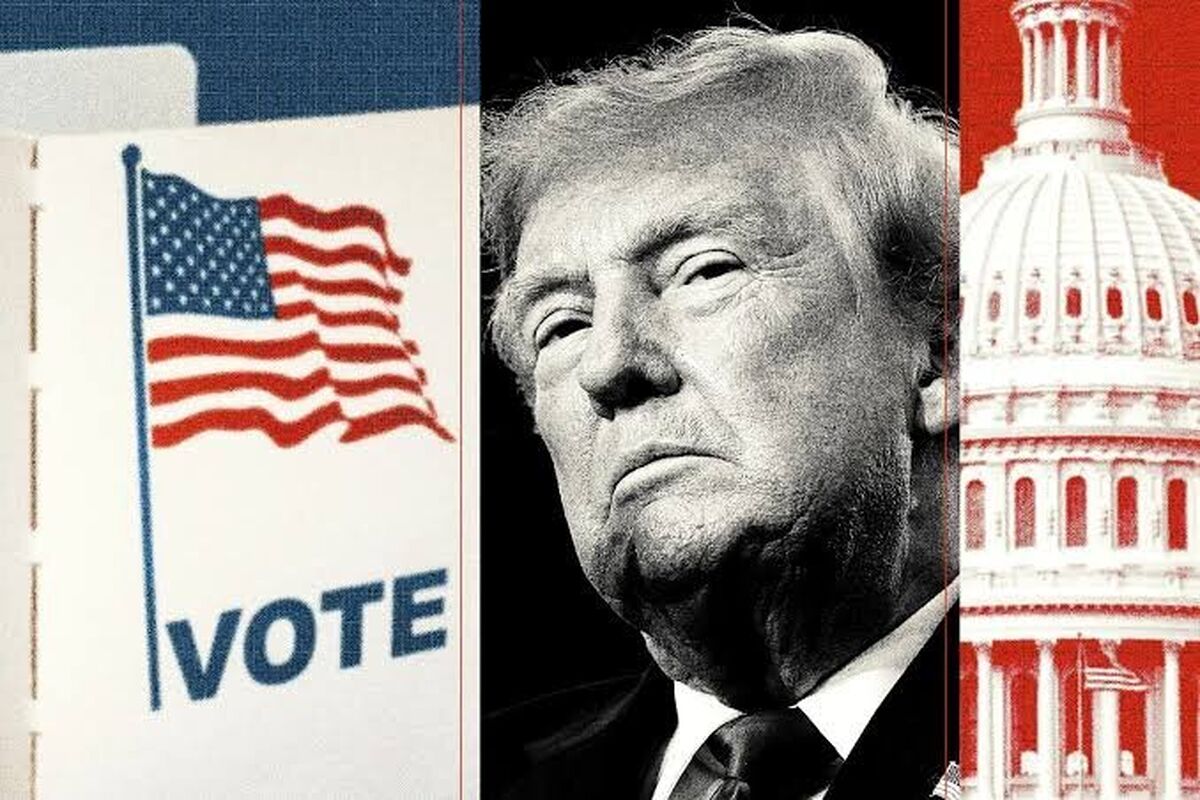
In an exclusive interview with ISNA, Ghahremanpour examined the implications of the Democrats' victory in the US midterm elections and their potential control of both chambers of Congress, arguing that the results could push Trump toward either greater restraint or more aggressive foreign policy decisions.
The election results have raised questions about the future direction of Trump's domestic and foreign policies, particularly as a Democratic-controlled Congress could increase legislative and political pressure on the White House.
Election Results Could Make Trump More Cautious or More Aggressive
Ghahremanpour said the Democrats' electoral gains could influence Trump's behavior in two contrasting ways.
“The reality is that these results could have two effects on Trump's personal behavior. First, they might make him more cautious, because both chambers of Congress would be controlled by Democrats, who could naturally exert pressure on him through legislation, budgetary powers, investigations and impeachment,” he explained.
However, the analyst warned that the same developments could also encourage Trump to pursue a more confrontational approach, particularly toward Iran.
“On the other hand, the results could actually make Trump bolder and more reckless, pushing him further toward what is commonly referred to as a presidential legacy,” Ghahremanpour said.
He explained that Trump might prioritize implementing the policies he wants to leave behind rather than focusing on how Democrats intend to challenge his administration.
“In other words, instead of worrying about what the Democrats might do, Trump could intensify his actions against Iran in an attempt to realize and establish the legacy he has envisioned for himself,” he added.
Trump Does Not Believe His Policies Need to Change
The Iranian expert also addressed Trump's interpretation of the Republicans' electoral defeat, noting that the US president does not appear to consider himself responsible for the outcome.
“Trump believes he was not responsible for this defeat and that weak candidates caused the Republicans to lose,” Ghahremanpour said.
According to the analyst, this assessment suggests that Trump continues to believe his political approach is correct and sees no reason to change course.
He argued that Trump applies similar reasoning to the war against Iran.
“Trump maintains that the American people approved of his actions against Iran but were unwilling to bear their costs,” Ghahremanpour said.
He added that Trump's current assessment indicates that he still considers his overall policies and decisions justified.
Ghahremanpour emphasized that the consequences of the midterm elections should be examined both from the perspective of Trump's personal psychology and through the institutional relationship between the executive and legislative branches.
“From both perspectives, these elections could either make Trump more cautious in foreign policy or encourage him to act more boldly and recklessly,” he said.
“Which of these scenarios materializes will naturally depend on the more detailed assessment made by Trump and his team,” he added.
Democrats' Approach Could Influence Trump's Next Moves
The analyst stressed that Trump's response to developments in the coming months would also depend heavily on how Democrats choose to confront him.
“If Democrats place excessive emphasis on Trump's defeat, it could make him more aggressive,” Ghahremanpour warned.
He added that the Democrats' approach to Trump's family wealth could also influence the president's behavior.
“How Democrats deal with Trump's family wealth is also important, as this could push him toward more extreme actions,” he said.
Period Before New Congress Takes Office Could Be Particularly Dangerous
Ghahremanpour identified the period between the November elections and the inauguration of the new Congress in January 2027 as a particularly sensitive phase.
“More important than all these factors is the period Trump has between now and January 2027,” he said.
The analyst argued that the outgoing House of Representatives and Senate would experience a decline in political influence during this transitional period, potentially giving Trump greater freedom of action.
“During this period, the existing House and Senate will, in a sense, become less powerful. Therefore, Trump will have greater room for maneuver from a legal standpoint,” he explained.
Ghahremanpour warned that if Trump concludes that Democrats intend to take aggressive measures against him once the new Congress convenes, he may seek to accelerate the implementation of policies he considers central to his presidential legacy.
“If he reaches the conclusion that Democrats will take strong action against him after assuming control of Congress, he may move to implement what he wants to establish as his own distinctive legacy,” he said.
“This is why analysts believe that the roughly three-month period before the new Congress takes office could be one of the most dangerous phases in the confrontation between Iran and the United States,” Ghahremanpour emphasized.
Military Action Against Iran Remains on Trump's Agenda
Asked whether domestic political developments and growing Democratic pressure could increase the likelihood of a US military attack on Iran, Ghahremanpour said he believed the military option remained under consideration in Washington.
“It appears that an attack on Iran remains on Trump's agenda and has not been removed from consideration,” he told ISNA.
He argued that the US Congress has limited ability to directly constrain presidential decisions in foreign policy, particularly within the American presidential system.
“From a legal standpoint, the House of Representatives and the Senate cannot significantly restrain Trump in foreign policy. Moreover, in a presidential system, the president's power generally outweighs that of parliament,” he said.
The analyst therefore maintained that the possibility of military action against Iran remained open.
However, he suggested that Trump could reconsider this approach if he believed a diplomatic agreement would better serve his domestic political interests.
“The option of attacking Iran remains on Trump's agenda unless he concludes that the conditions are favorable for reaching an understanding that could help resolve the issue of the war more effectively within the United States while also allowing him to save face,” Ghahremanpour explained.
“In that case, Trump might choose an agreement instead of a military attack. But for now, there are no indications that he has abandoned the option of war,” he concluded.