
Why the world no longer sees US as a reliable partner?
The United States long portrayed itself as the guardian of a rules-based order. Today, a widening gap between rhetoric and conduct is eroding global trust in Washington.
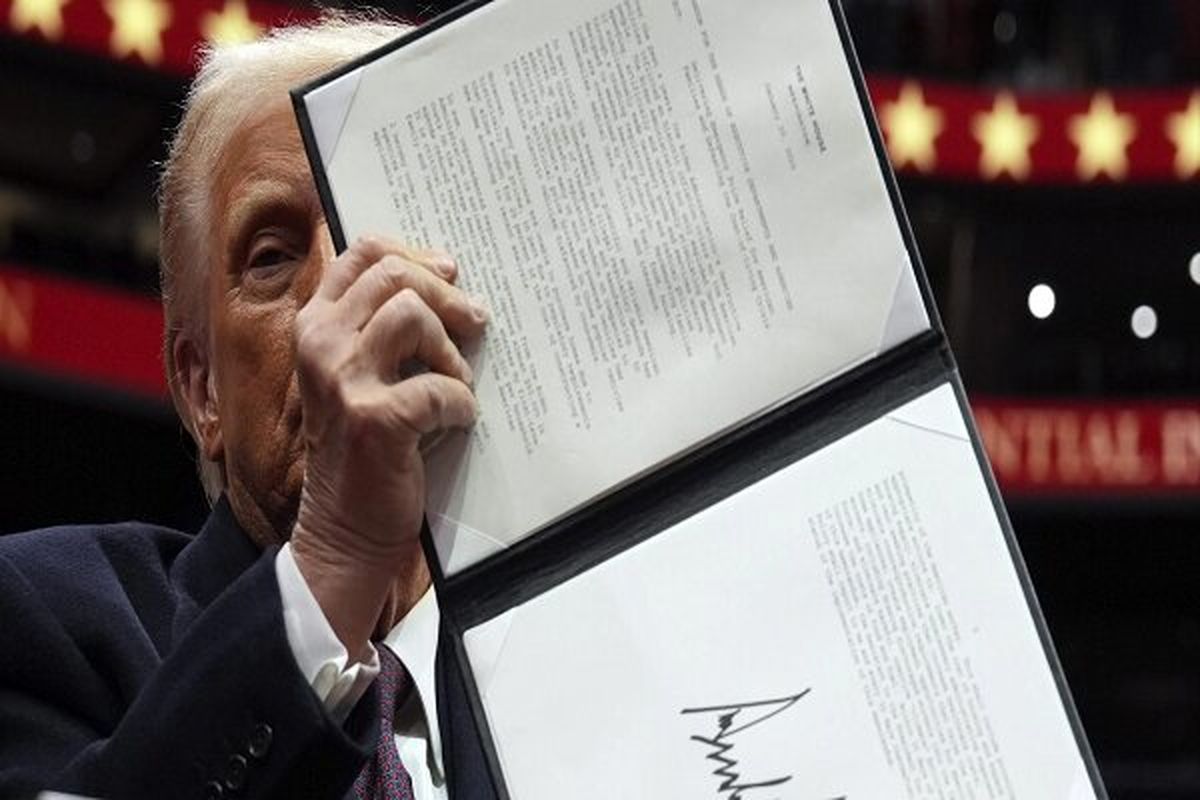
In past decades, the United States consistently sought to portray itself as the architect and guarantor of a “rules-based order”; an order that took shape after World War II around institutions such as the United Nations, the International Monetary Fund, and the World Bank. For years, Washington used this position to consolidate its global influence and build its international legitimacy on the basis of defending shared rules. However, what has unfolded in recent years—especially during the presidency of Donald Trump—indicates that a deep gap has emerged between claim and practice; a gap that, if not repaired, could accelerate America’s decline.
One of the most prominent manifestations of this gap has been a return to policies that, rather than evoking modern diplomacy, recall the logic of the “law of the jungle”; a logic in which power replaces rules and pressure becomes the primary tool of interaction with others. Trump came to power with the slogan “America First,” but in practice, this slogan translated into an approach that did not spare even Washington’s closest allies from threats and sanctions.
The imposition of heavy tariffs on steel and aluminum imports from Europe, Canada, and even Japan was a clear example of this behavior. Countries that for decades had partnered with the United States in Western security and economic structures suddenly received the message that even strategic relations would not shield them from punitive measures. When Washington, citing “national security,” imposes tariffs on the products of its own allies, the question arises in their minds as to how expansively America’s national security can be interpreted. Such actions not only created economic rifts but also eroded political trust.
The episode of the proposal to purchase Greenland from Denmark likewise became a symbol of an instrumental and transactional view of international relations. Proposing such an idea—concerning a territory that is part of an allied NATO member state—reminded many observers of the colonial era, when major powers traded territories like commodities. The negative reaction in Copenhagen and among European public opinion showed that today’s world no longer accepts such language. But the more important message was that even America’s closest partners may be exposed to unexpected and humiliating decisions.
Moreover, Trump’s approach to resolving international disputes was often based on maximum pressure and threats of the use of force. From verbal threats against various countries to unilateral withdrawals from multilateral agreements, all of these reinforced the perception that Washington relies more on coercive instruments than on legal and diplomatic mechanisms. Withdrawal from international agreements and the reimposition of sweeping sanctions sent a signal to the world that America’s signature could become invalid with a change of administration. Under such circumstances, what incentive remains for long-term trust in Washington’s commitments?
Economic sanctions also shifted from being an exceptional tool to a permanent policy. The scope of these sanctions expanded to such an extent that not only target countries, but also third-party companies and banks were exposed to punishment. These extraterritorial sanctions effectively disregard the sovereignty of other states and compel them to align their policies with domestic decisions of the United States. The natural result of such an approach is an effort to reduce dependence on the dollar-dominated financial system—an effort that has accelerated in recent years.
Within this framework, emerging powers and even some traditional US allies have moved toward strengthening independent mechanisms. The expanding role of groups such as BRICS can be seen as part of this trend; an attempt to create balance against Western financial and political dominance. The more the United States resorts to instruments of pressure, the greater the incentive for others to converge within alternative frameworks.
Trump’s harsh and at times absurd behavior toward allies has also had significant psychological consequences. European leaders have explicitly spoken of the necessity of “strategic autonomy.” In Asia as well, countries—while maintaining security relations with the United States—are seeking to deepen economic ties with China so as not to remain vulnerable in the event of sudden shifts in Washington’s policies. This growing caution indicates that America is no longer viewed as a stable and predictable partner.
From a historical perspective, the decline of great powers often begins when the gap between their claims and their conduct becomes excessive. The United States still occupies a distinguished position in military and technological terms, but hard power without moral legitimacy and international trust is not sustainable. If a country claims to defend international law but in practice applies rules selectively or treats its allies as commercial rivals, this contradiction will sooner or later lead to a reduction in influence.
The global economy has also responded to the instability of US policies. Major companies are reviewing their supply chains to reduce the risks of sanctions and sudden tariffs. Countries are seeking to diversify their foreign exchange reserves and create independent payment systems. These trends may be gradual, but taken together, they lead to a gradual erosion of America’s leverage.
The continued reliance on force or threats to resolve issues will not be effective in a world moving toward multipolarity. The more Washington relies on the logic of imposition, the more others will turn to balancing strategies. In such an environment, the United States may find itself facing a world that distances itself from it not out of hostility, but out of distrust.
Ultimately, the greatest threat to America’s position is not the rise of others, but its own strategic choices. If behaviors reminiscent of the law of the jungle continue, if allies are treated as competitors, and if international rules are respected only when aligned with Washington’s short-term interests, the process of decline will accelerate. Today’s world is more interconnected than ever, and power no longer derives solely from the barrel of a gun or the size of an economy; it flows from trust, stability, and adherence to commitments. A country that loses this capital—even if it is the most powerful—will sooner or later lose its position in the international system.